
Download the free checklist that shows how beginner investors prepare deals that hard money lenders will actually fund.
Used by beginner investors to prepare deals before approaching hard money lenders.
It’s not lack of motivation. It’s lack of clarity around funding.

By the time a bank finishes reviewing your paperwork, the deal is gone.
Opportunities don’t wait for 30-day approvals.

Most beginners believe they need $50,000–$100,000 saved before starting. That belief alone keeps people on the sidelines for years.

One bad deal calculation can wipe out your profits. Without understanding funding structure, everything feels risky.
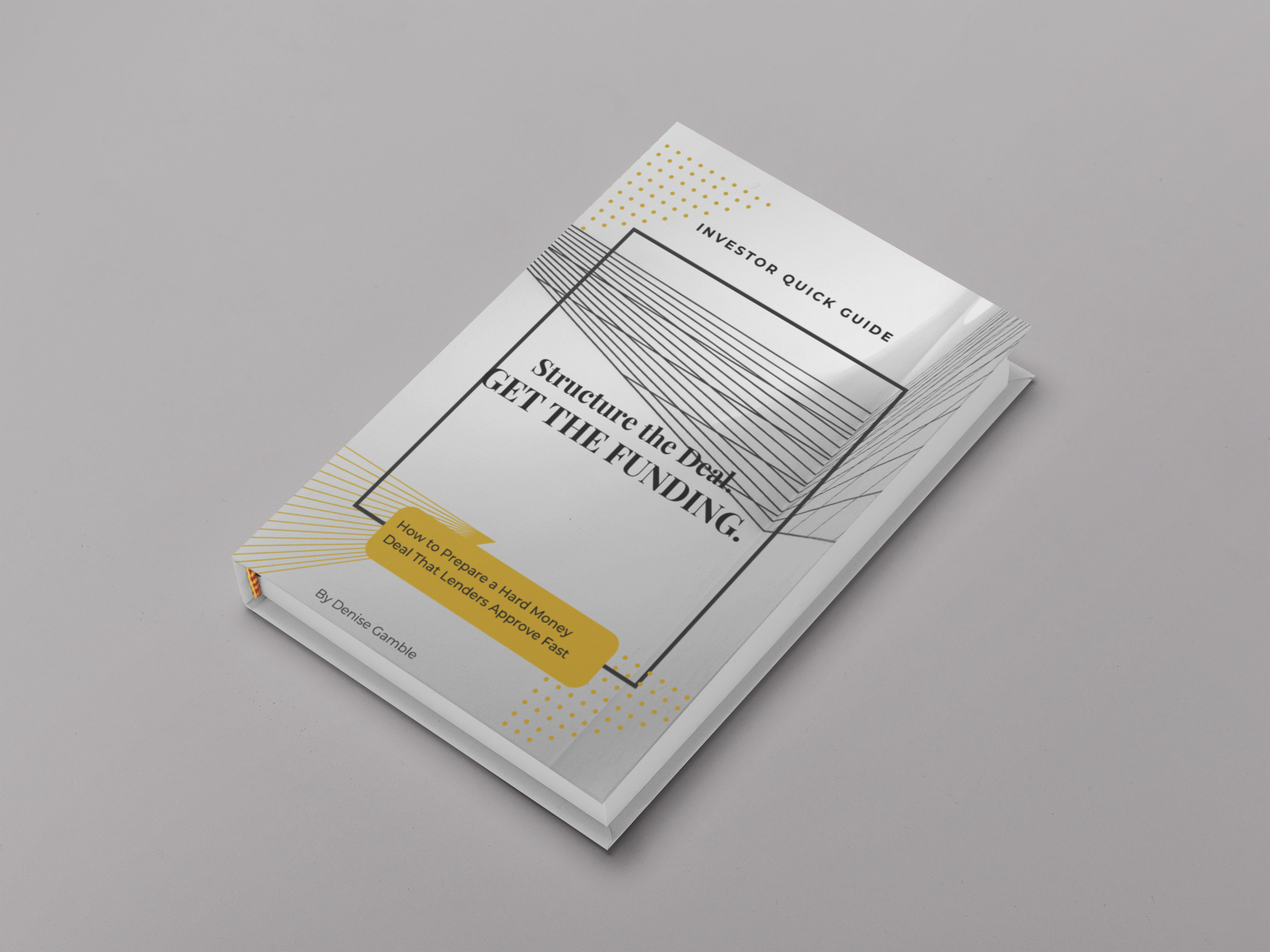
“Low-Cost Investor Quick Guide”
A step-by-step breakdown of how hard money funding works — so you can structure smarter deals and move faster than traditional lenders allow.
Unlike traditional bank loans, hard money funding focuses on the deal — not just your income history or credit profile. This blueprint breaks down exactly what lenders look for and how to structure deals that make sense on paper.
“Instant download • Beginner friendly • No prior experience required”
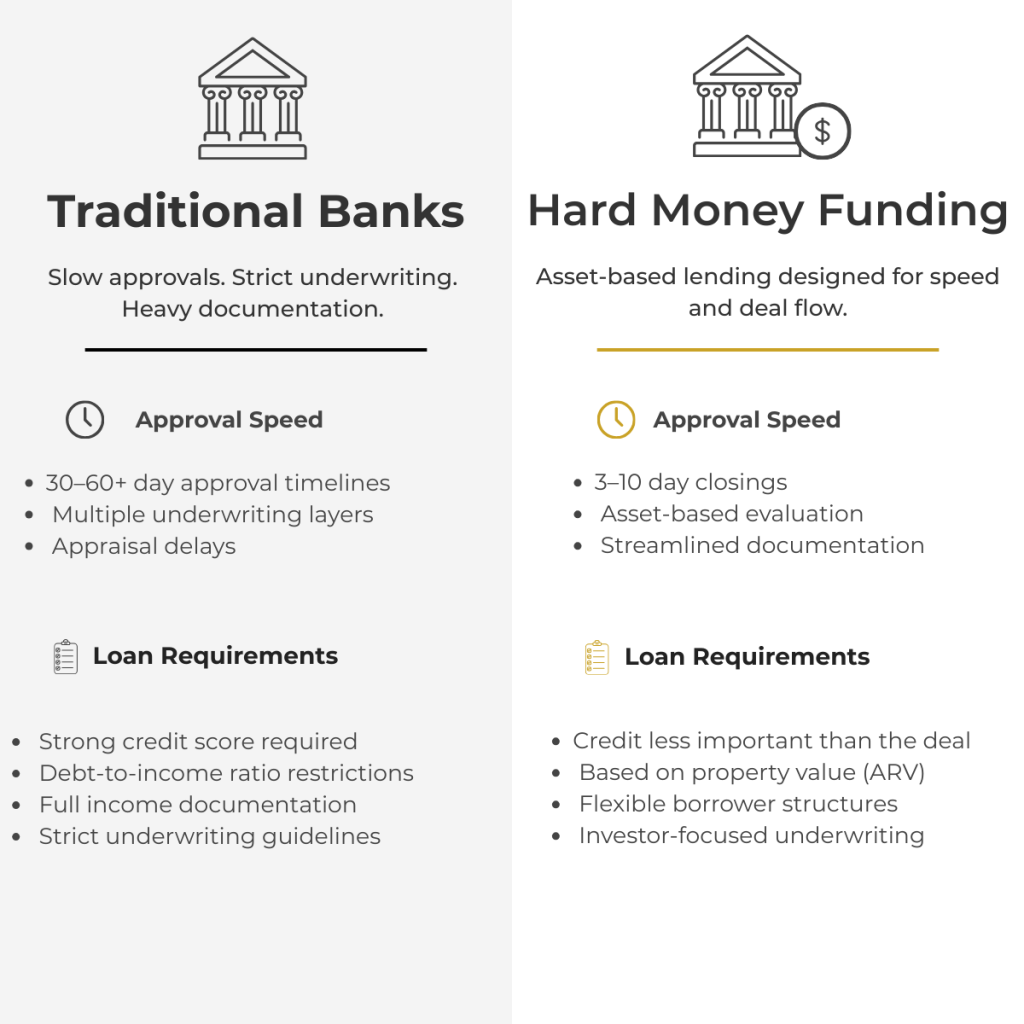
Hard money lenders focus on the property and the numbers — not just your income or job history. Here’s what they actually look at before approving a deal.
After Repair Value (ARV) is what the property will be worth after renovations. Lenders look at comparable sales to estimate this number.
LTV is the percentage of the property’s value that the lender is willing to fund. Most hard money lenders fund 65–75% of ARV.
Lenders want to know how you plan to pay them back. This is called your exit strategy.
Let’s break down a simple deal so you can see how the numbers work in real life.
Purchase Price: $100,000
Renovation (Rehab): $25,000
Total Project Cost:
$125,000
After Repair Value (ARV):
$150,000
Typical lender funds 70% of ARV
$150,000 × 70% =
$105,000 Loan
Investor cash needed:
$125,000 project cost
− $105,000 loan
$20,000 investor cash
Sale Price: $150,000
Loan Payoff: $105,000
Remaining:
$45,000
Typical deal expenses
(realtor fees, Lender interest, closing costs)
≈ $20,000
Estimated Profit:
≈ $25,000
This example shows why understanding ARV, LTV, and deal structure is critical when working with hard money lenders.
This guide was created for beginners who want to understand how hard money lenders evaluate deals before approving funding.